That Sound Is Costing You Money
You know the sound — the toilet that won't stop running, the one that randomly refills itself every few minutes, the one you have to jiggle the handle on every time you leave the bathroom. It's annoying, but more importantly, it's wasting water. A running toilet can waste up to 200 gallons of water a day. Over a month, that's a serious hit to your water bill.
The good news? Most running toilets can be fixed in about 15 minutes with no special tools and no plumbing experience. Here's how to diagnose and fix the three most common causes.
Step 1: Take Off the Tank Lid
Carefully remove the lid from the back of the toilet tank and set it down somewhere flat — these lids are porcelain and they break easily. Now flush the toilet and watch what happens inside the tank.
Cause 1: The Flapper Isn't Sealing
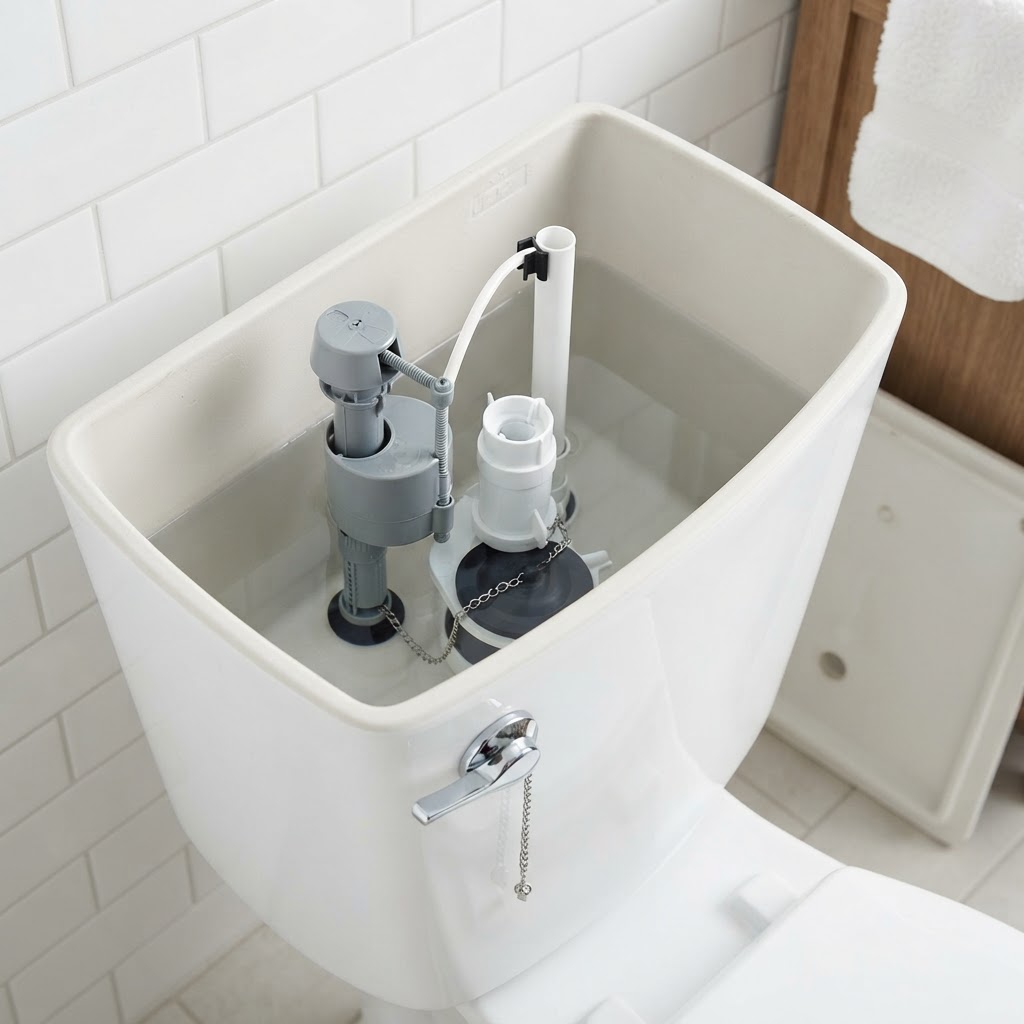
This is the single most common cause of a running toilet, and it's the easiest to fix. The flapper is the rubber seal at the bottom of the tank that lifts when you flush to let water into the bowl. Over time, the rubber degrades, warps, or gets mineral buildup on it, and it stops making a watertight seal.
How to check: Turn off the water supply valve behind the toilet, flush to drain the tank, and feel the bottom of the flapper. If it feels brittle, warped, or slimy, it needs replacing.
How to fix: Flappers are cheap — usually under $10 at any hardware store. Take your old one to the store to match the size, or just note the brand of your toilet. Snap the old one off, snap the new one on, and you're done.
Cause 2: The Water Level Is Too High
If water is constantly flowing into the overflow tube — the open pipe standing in the middle of the tank — your water level is set too high. The water never stops filling because it's always draining down the overflow tube.
How to check: The water level should sit about an inch below the top of the overflow tube when the tank is full. If it's right at the top or spilling over, this is your problem.
How to fix: The fill valve (the tall tower on the left side of the tank) has an adjustment screw or a float you can raise or lower. Turn the adjustment screw to lower the float, which lowers the water level. Flush and check until the water stops about an inch below the overflow tube.
Cause 3: The Fill Valve Is Worn Out
If you've replaced the flapper and adjusted the water level and the toilet is still running, your fill valve may be worn out. The fill valve controls the water coming into the tank, and when it fails, it either won't shut off or it turns on and off by itself.
How to fix: A new fill valve costs about $15-20 and comes with instructions. You'll need to turn off the water, disconnect the supply line, remove the old valve, and install the new one. It's a bit more involved than the flapper, but most homeowners can handle it in about 30 minutes.
When to Call a Professional
If you've tried all three fixes and the toilet is still running, or if you notice water leaking from the base of the toilet when you flush, you may have a bigger issue — a worn wax ring seal or a cracked bowl. That's when it's time to call a plumber.
At All American Plumbing, we're happy to help with any toilet repair, big or small, throughout the Brownsboro and East Texas area. But we'd rather you save the money and fix the simple stuff yourself — when you do need us, you'll know we're giving you an honest assessment.